Monday - Thursday
10:00AM - 9:00PM
Friday - Saturday
10:00AM - 10:00PM
Sunday
11:00PM - 8:00PM

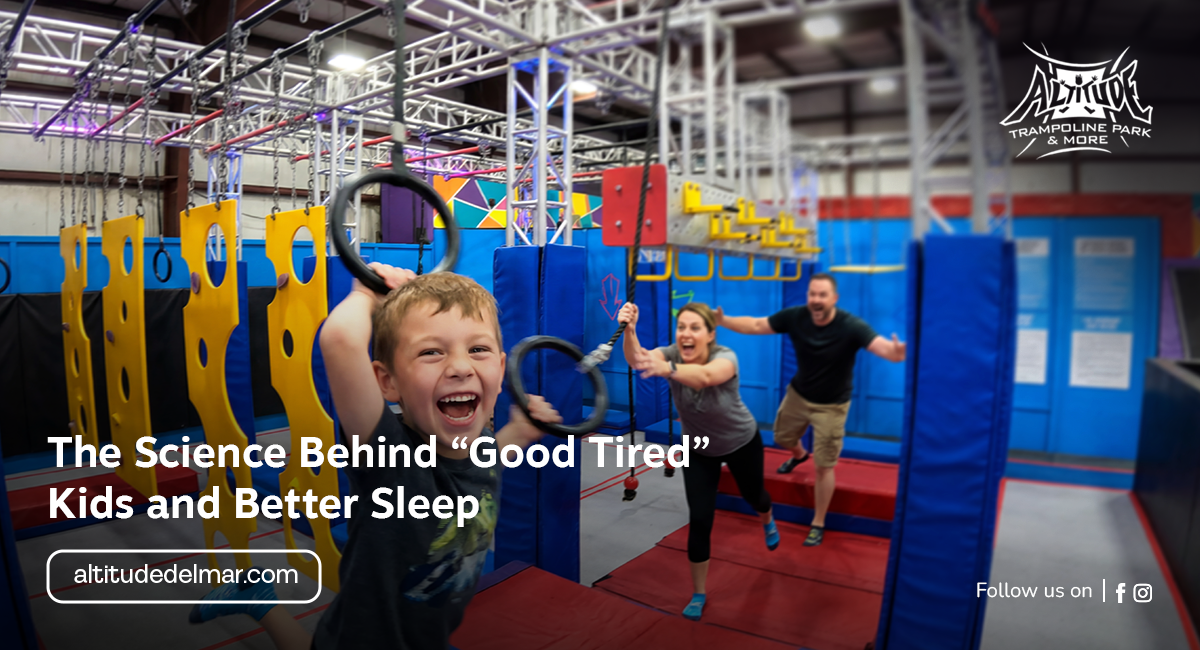 |
It’s dinnertime after a busy afternoon. The kids bounce in from the car with flushed cheeks and silly grins, snack for five minutes, then collapse into the nearest blanket at bedtime. They are asleep before you can finish a single page of the storybook. That’s the kind of exhaustion parents call “good tired.”
It’s the peaceful, restorative sleep that follows real physical play. Not the cranky, wired kind that comes from screens and overstimulation. This isn’t parenting folklore. There’s real science behind why moving the body helps kids fall asleep faster, sleep deeper, and feel calmer the next day.
Let me explain the brain-and-body mechanics in plain language, show you what research says, and give practical tips for turning everyday play into better nights.
Kids need 60+ minutes of moderate-to-vigorous activity most days for health and better sleep.
Physical activity improves sleep quality, reduces the time it takes to fall asleep, and increases the chance of deeper, restorative sleep.
Movement releases feel-good brain chemicals and calms the nervous system. Two things that make falling asleep easier.
Not all tiredness is created equal. A day of endless screen time can leave a kid exhausted in a way that’s jittery, emotionally volatile, and hard to settle. That’s because screens stimulate the brain without offering the bodily release it needs.
“Good tired” is physical fatigue that comes from activity. Muscles used, heart rate raised, breath deeper, brain satisfied. It’s accompanied by hormonal and nervous-system changes that prime the body for restorative sleep. Several reviews and studies show a consistent pattern... Kids who get regular moderate-to-vigorous physical activity sleep better.
The longer we’re awake and active, the more sleep pressure builds. Physical activity accelerates that process in a healthy way. The body uses fuel, muscles fatigue a bit, and the brain signals that rest is appropriate. That physiological pressure makes it easier to fall asleep and stay asleep. Studies show active children fall asleep faster and have better sleep efficiency than their less-active peers.
Exercise triggers the release of neurotransmitters that lift mood, reduce stress, and create a sense of reward. That chemical boost helps kids unwind emotionally before bed instead of stewing on small frustrations. Harvard Health explains how exercise affects these “feel-good” systems and why that matters for mood and sleep.
Physical activity raises body temperature. Afterward, the natural cool-down period signals the brain that it’s time to rest. A falling body temperature in the evening helps initiate sleep. This is why timing matters. Vigorous activity too close to bedtime can sometimes have the opposite effect, so aim to finish active play earlier in the evening when possible. Medical centers like Johns Hopkins note that timing can influence how exercise affects sleep.
Rhythmic, repetitive movement sends calming signals to the autonomic nervous system. For kids who are easily overstimulated, these movement patterns act like a reset button. They downshift from sympathetic arousal to a calmer state that’s friendlier to sleep. Reviews of physical activity and sleep report improved sleep quality from regular moderate activity.
Screens create cognitive fatigue but not the same restorative physical exhaustion. Blue light from screens can delay the sleep hormone. This makes it harder to fall asleep even when kids feel “tired.” Active play replaces sedentary screen hours with movement that actually helps the body prepare for rest. WHO and CDC guidelines emphasize that less sedentary time and more play benefit children’s sleep and development.
Daily activity matters: Health agencies recommend at least 60 minutes of moderate-to-vigorous activity for school-aged kids. Adherence is linked to better sleep and daytime functioning.
Exercise improves sleep quality: Systematic reviews and pediatric studies find that regular activity reduces time to fall asleep and increases sleep efficiency.
Timing matters: Moderate activity earlier in the day or late afternoon tends to help. Intense exercise immediately before bed may interfere for some children. Experts suggest families test timing and aim to finish big play sessions a couple of hours before lights-out.
Weather and schedules often make outdoor play inconsistent. Indoor active spaces offer reliable, high-energy movement in a controlled environment. They’re especially helpful in seasons when outdoor time is limited.
Practical benefits
Built-in vigorous play (easy route to that daily 60+ minutes).
Age-zoned areas reduce conflict and allow appropriate intensity.
Staffed spaces often run short guided games that get kids active safely.
They replace screen time with movement and social interaction, which together support emotional regulation and better sleep.
(2).png)
Avoid very intense, highly stimulating activity right at lights-out for sensitive kids. Test timing and watch for individual responses.
Ensure play is age-appropriate and supervised, especially in trampoline environments. Proper socks, rules, and staff oversight matter.
If a child has a medical condition affecting sleep, consult a pediatrician. While activity usually helps, individual needs vary.
“Good tired” is more than a parenting cliché. It’s a physiological state you can encourage with joyful, intentional movement. When children get the kind of play their bodies were built for, their brains finish the day ready to repair and restore.
That’s why trampoline parks aren’t just about burning energy. It’s about setting the stage for better sleep, better moods, and better days.
The Funfull App
Search for the “Funfull” app and download. Once registered, enjoy your visits to all partnering entertainment venues!.png)
.png)